


According to medical statistics, acute back pain is the second most common cause of disability.At least 80% of people have suffered from them at least once.They may occur sporadically or be observed during exacerbations of spinal diseases.But in any case, acute and chronic back pain requires competent treatment and targeted action on the causes of its occurrence.
Acute back pain: causes
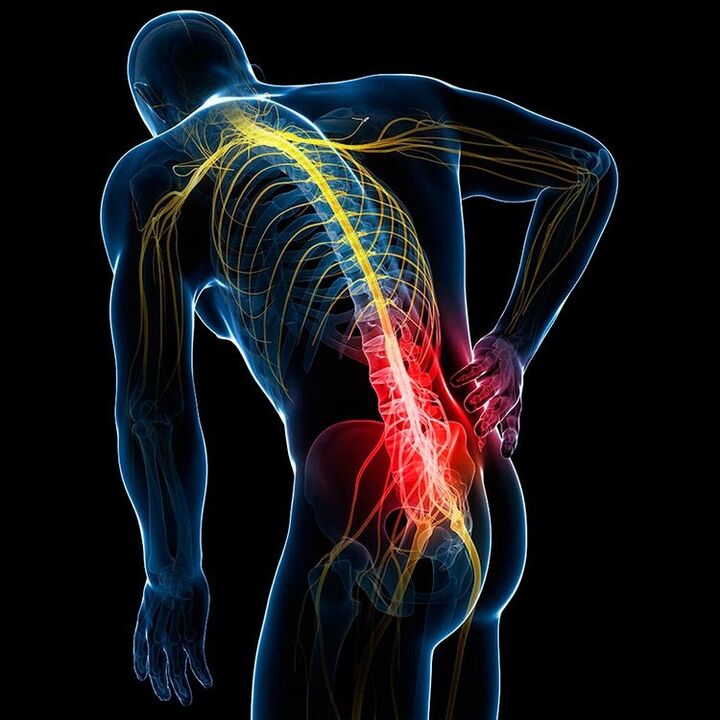
Acute pain is defined as pain that lasts less than 6 weeks.For most, it goes away within 2 weeks.Although it is impossible to predict initially how long it will last.However, in almost half of cases, similar or more severe attacks recur in the future and become chronic pain.
Acute pain can vary in intensity, be dull, burning, etc.Sometimes it radiates to the arms, legs, buttocks.So-called lumbago in the back often occurs after hypothermia, excessive physical exertion and as a result of sprains.Several days may pass between the impact of the traumatic factor and the immediate manifestation of the pain syndrome, and it will manifest itself under the influence of small physical efforts, for example, bending over.
They can also be the result of a back injury or be the first manifestations of spinal diseases, including:
- osteochondrosis;
- intervertebral hernia;
- spondyloarthrosis;
- spinal canal stenosis, etc.
Increase the likelihood of back problems:
- frequent stress;
- regular increase in physical activity;
- overweight;
- frequent and prolonged position.
In addition to severe back discomfort, headaches, burning sensations in the legs and dizziness may occur.All of these symptoms should be reported to your doctor at your appointment.
Regardless of which anatomical structure was damaged first, this entails a whole chain of sequential changes that increase discomfort.Initially, inflammatory factors form in the lesion, causing swelling and irritation of the nerve fibers.In response to this, muscle spasm often occurs, which further aggravates the situation and causes poor circulation in the affected area.This leads to a decrease in the amount of nutrients and oxygen supplied to the lesion, as well as the retention of metabolic products in it.
Treatment of acute back pain
To relieve pain, lie on your back on a hard surface.This will allow your back muscles to relax and relieve stress from your spine.To enhance the effect, you can place orthopedic pillows under your knees and head, but it is important to avoid arching your lower back.For severe pain, short-term use of NSAIDs is permitted.In the future, you should definitely contact a neurologist or spine surgeon to determine the cause of the pain syndrome.
You should see a doctor as soon as possible if there is no improvement within a week, if there is a recurrence of the attack or pain radiating to the feet or knees, or problems with urination and defecation.To diagnose existing disorders, patients are shown:
- magnetic resonance imaging;
- TC;
- X-ray;
- biochemical blood test;
- UAC.
Based on the research results and symptoms, the doctor makes a diagnosis and develops treatment tactics.In case of acute pain that deprives the person of the ability to work, spinal anesthesia may be offered, which relieves the pain syndrome within a few minutes.
After the discomfort passes, it is important not to stay in bed.Moderate physical activity, supplemented by special therapeutic exercises, is the best prevention of recurrence of such attacks in the future.
By going to the hospital, you will certainly receive high-quality treatment for your pain and the causes that cause it.Specialists will be able to develop the most effective treatment tactics and quickly relieve pain with the help of a well-made and affordable block.
Chronic back pain: causes
People suffer from chronic back pain just as often.They can worsen and turn into an attack of acute pain, which completely disconnects the person from their usual rhythm.Most often it is a consequence of:
- A sedentary lifestyle, which leads to weakening of the muscular corset.This causes increased load on the spine and compression of the vertebrae.The result is osteochondrosis, protrusion of intervertebral discs and intervertebral disc herniation, spondyloarthrosis.
- Posture disorders.Long-term preservation of any body position in which the natural curves of the spine are disturbed causes its curvature and the development of scoliosis or kyphosis.This leads to degenerative changes in the intervertebral discs, redistribution of the load on the muscles and compression of the nerve roots.
- Weakening of abdominal muscles.Because they act as support for internal organs and partially relieve the spine, when they are weak, the load on the lumbar region increases, which increases lordosis and causes chronic pain.In addition to a sedentary lifestyle, weakening of the abdominal muscles can be a consequence of pregnancy or obesity.
- Age-related changes.Over the years, the intervertebral discs gradually become dehydrated, which causes a decrease in their elasticity, resistance and size.The fibrous ring surrounding the gelatinous nucleus pulposus dries out and becomes more fragile.The loads cause the formation of cracks in it, which leads to the formation of protrusions and hernias.The resulting bulge can compress nearby blood vessels, nerve roots, and the spinal cord, causing pain.
Diseases accompanied by chronic back pain include:
- osteochondrosis;
- spondyloarthrosis;
- osteoporosis;
- intervertebral hernia;
- facet syndrome;
- Bekhterev's disease;
- spondylolisthesis;
- rheumatoid arthritis;
- intercostal neuralgia;
- oncological and other diseases.
A common cause of chronic pain is joint wear and tear.The cartilage located in them also tends to thin under excessive loads on the spine.As a result, when they move, they no longer perform their shock absorption function, which causes friction of bone fragments and the development of inflammation.
Back pain treatment
Treatment tactics are developed based on disorders discovered during diagnostic studies.When spinal diseases are detected, conservative therapy is initially prescribed, including:
- drug therapy;
- physiotherapy;
- massage;
- Exercise therapy.
Conservative therapy
When treating back pain, a comprehensive individual approach is important.Depending on the cause of its occurrence, patients are prescribed various medications, in particular:
- NSAIDs - drugs in this group have anti-inflammatory and analgesic effects, but with prolonged use they negatively affect the state of the gastrointestinal tract;
- corticosteroids – medicines with pronounced anti-inflammatory properties, prescribed in moderate to severe cases;
- muscle relaxants – help eliminate increased muscle tone and spasms;
- antidepressants – help eliminate psychological discomfort, which often reduces the effectiveness of conservative therapy;
- topical preparations - ointments or gels containing anti-inflammatory, warming or cooling components can help reduce the intensity of pain and practically do not cause side effects;
- chondroprotectors – preparations containing glucosamine and chondroitin have a beneficial effect on the condition of cartilage tissue, increase its elasticity and help restore normal thickness.
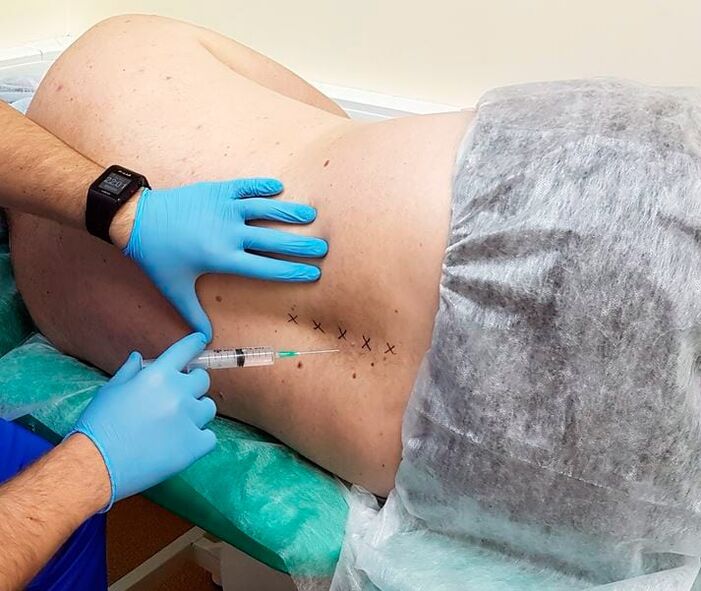
In mild cases, oral medication is sufficient.But in more complex situations, patients may receive intra-articular injections.For severe pain, it is recommended to do blockages once or in a full course, which may include up to 10 procedures.
To increase the effectiveness of drug therapy, patients are given massage and physiotherapy sessions.Proper impact on the back muscles helps to activate blood and lymph flow, improve metabolic processes and eliminate muscle spasms.Manual therapy is very effective for spinal deformities, especially grade 1-2 scoliosis.Regular sessions help restore the normal position of the spine and eliminate pressure on internal organs.
As part of physiotherapeutic treatment, patients are prescribed sessions:
- UHF;
- magnetic therapy;
- Bernard chains;
- laser therapy;
- electrophoresis;
- Ural Federal District;
- balneological treatment.
If it is not possible to improve the condition within six months or there is a risk of complications, patients can be offered surgical treatment for existing diseases.
Surgical treatment
Modern methods of surgical intervention are characterized by a high level of efficiency and safety.They allow you to quickly eliminate the pathological cause of pain and often do not require hospitalization.But most minimally invasive and microsurgical methods can only be used when patients turn to spine surgeons in the early stages of the disease.
Indications for surgical treatment are:
- progressive intervertebral disc herniation;
- spinal canal stenosis;
- sequestered hernias;
- spinal fractures;
- grade 3–4 scoliosis;
- severe forms of spondyloarthrosis;
- compression of the spinal cord or its nerve roots;
- hemangiomas of the vertebral bodies;
- instability of individual spinal segments;
- cauda equina compression syndrome.
The surgeon determines the type of operation based on the severity of the patient's condition.For the same diagnosis, surgical treatment can be carried out in different ways, differing in the degree of invasiveness, effectiveness, duration of rehabilitation and cost.
Recently, minimally invasive methods of surgical treatment have become very popular.With their help, intervertebral protrusions, intervertebral disc hernias, hemangiomas and a number of other diseases are treated.The minimally invasive surgery takes no more than an hour and, once performed, the patient can walk almost immediately and leave the clinic on the same day or the next day.
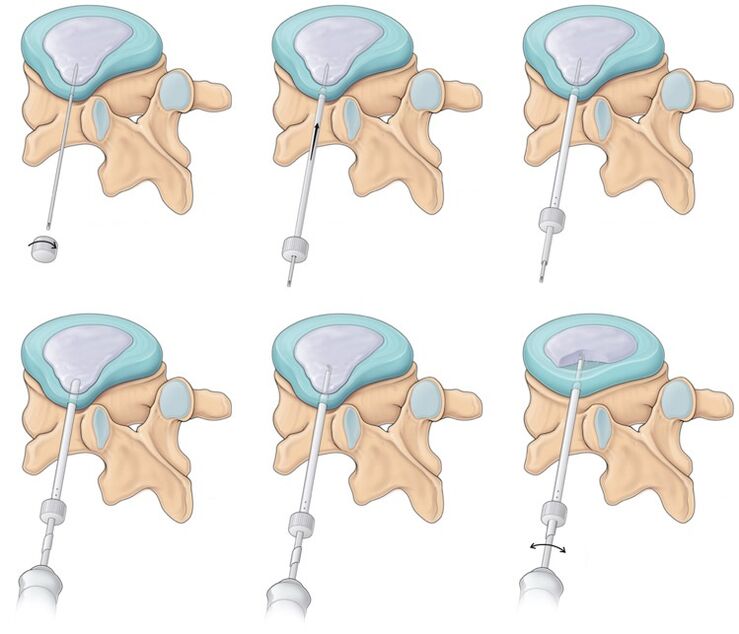
The great advantages of the method are a good cosmetic effect (in most cases, all necessary surgical instruments are inserted through point punctures in soft tissues), ease of rehabilitation and affordable price.In the case of intervertebral hernias, only nucleoplasty or cold plasma hydroplasty (hydrodiscectomy) can be considered a more promising method.
In situations where microsurgical techniques cannot be used, surgeons perform open operations.During them, it is possible to completely remove pathologically altered formations, level severe deformities of the spine, replace structures that cannot be restored with implants, and achieve normal functioning of the spine by assembling titanium metal structures.
Modern spinal surgery can treat almost any back problem.All the latest methods of surgical treatment of spinal diseases are available in many institutions.A team of doctors of different profiles will help you get rid of acute or painful chronic back pain in the shortest possible time.
Preventing back pain
After the crisis passes and the pain subsides, to avoid a repeat of the episode, it is recommended:
- do not lift very heavy objects;
- do not lean over;
- walk more;
- refuse heavy physical work;
- When working sedentary, take regular breaks to warm up.